





The strength of Greek marble and the prospects of the sector were highlighted by the President of the Board of Directors of the Greek Marble Association, Ms. Ioulia Chaida, in a recent interview on the radio station City 106 Radio Thessaloniki. She emphasized both the material’s international trajectory and the challenges the industry is called to address.
Greek Marble as a Contemporary Experience


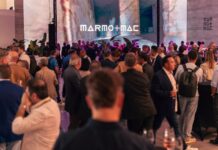
Greece’s participation in Milan Design Week, through the “Greek Marble Ouzeri” initiative, was a characteristic example of how Greek marble can be presented in a more modern and creative way. As Ms. Chaida noted, the goal was not simply to promote a product, but to showcase marble as part of Greek identity—connected with hospitality, culture, and contemporary design. The response was particularly positive, with strong interest from architects and designers, opening new pathways for the use of Greek marble in high-value markets.
A More Organized International Presence
The “Greek Marble | Then. Now. Forever.” strategy, implemented in collaboration with Enterprise Greece, has already helped the sector develop a more unified and cohesive presence abroad. The next step, according to the President, is to further strengthen this coordinated effort—through targeted actions in international markets, collaborations with design and architecture professionals, and the promotion of Greek marble as a modern and sustainable material.
One of the Most Export-Oriented Sectors in the Country
The marble sector is one of the most export-driven in the Greek economy, with over 80% of production directed abroad and a presence in more than 100 countries. Strong markets include China, the Middle East, and the United States, while interest from Europe—particularly within architecture and design—is steadily increasing. Northern Greece plays a key role, hosting the majority of production, with regions such as Drama and Kavala standing out internationally for the quality of their marble.
Ongoing Challenges
Despite its momentum, the sector continues to face significant challenges, mainly at the institutional level. Lengthy licensing procedures and difficulties in accessing new deposits create delays and often hinder investment. At the same time, factors such as rising energy costs and global developments directly affect business competitiveness. As highlighted, what is needed is a simpler and more functional framework, with greater speed and predictability.
Sustainability and the Next Step
Sustainability has now become a fundamental prerequisite for the sector’s international presence. Investments are already being made in new technologies aimed at reducing environmental impact and improving resource efficiency. At the same time, marble itself—as a natural material with a long lifespan—supports this direction, offering a product that meets modern demands.
Coordination and a Common Direction in the Sector
Referring to representation, Ms. Chaida noted that the sector is multifaceted, and it is natural for different bodies to express its various aspects. The Greek Marble Association, as she emphasized, largely represents the core of productive activity—companies that deal daily with the practical issues of extraction and processing. In any case, representation should not be viewed as a field of competition, but as an opportunity for complementarity. The key objective is coordination and a shared direction, so that a unified and strong image of Greek marble is presented externally. Ultimately, what matters is the overall image of the country.
Growth Prospects
The greatest opportunities for Greek marble lie in high-value markets and projects—such as luxury real estate, large hospitality developments, and contemporary architecture and design. With coordinated actions and a more effective institutional framework, the sector has the potential to further strengthen its international position and fully leverage its comparative advantages.