

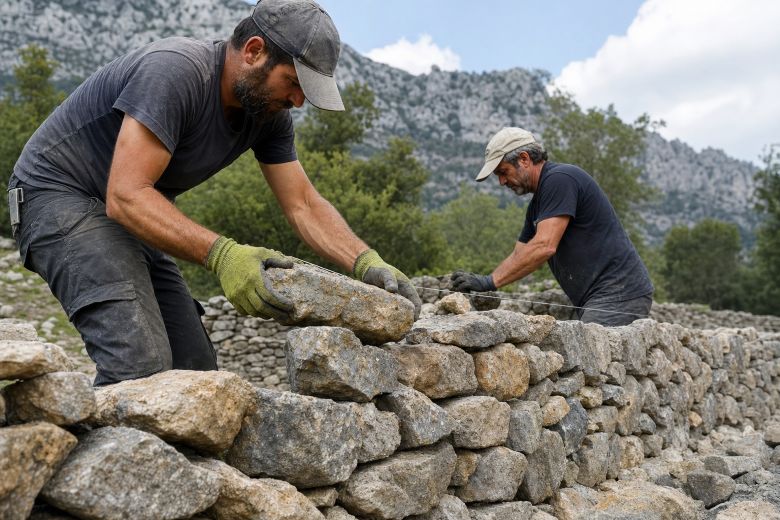



The traditional dry stone construction technique, recognized by UNESCO and actively promoted by the European Dry Stone Network Association (EDSN), is reshaping competitiveness and production practices within Europe’s natural stone sector.
Evolution from Tradition to Modern Markets
Since its 2018 inclusion on the UNESCO Intangible Cultural Heritage list, dry stone has evolved beyond traditional rural craftsmanship into a recognized, sustainable construction model. It balances economic cost-effectiveness, structural durability, and total environmental respect.


Organizations such as the European Dry Stone Network Association (EDSN) amplify this recognition by promoting cross-border cultural routes and specialized technical forums. Simultaneously, they are developing digital tools and application standards, fostering its adoption in modern architectural projects and landscape design.
Business Initiatives and Technology
The EDSN coordinates a pan-European cultural route to showcase European rural heritage. It also organizes annual industry events—such as the 4th REPS Forum (2026)—focusing on applied research, documentation, and digitalization of traditional building methods, effectively bridging technological innovation with heritage conservation.
Strategic Benefits for the Stone Sector
-
Sustainable Construction Alternative: A versatile technique that minimizes environmental impact and overall lifecycle costs compared to conventional masonry methods.
-
Commercial Positioning: UNESCO recognition and EDSN initiatives allow natural stone companies to offer certified products that meet strict green public and private procurement criteria.
-
Digital Modernization: The natural stone industry can capitalize on ancestral techniques by integrating cutting-edge technologies, such as Building Information Modeling (BIM) and 3D scanning.
-
Value Beyond Raw Material: Participating in heritage preservation projects fosters cross-border synergies, enhancing product visibility far beyond simple commercial distribution.
-
Need for Training & Certification: Formal vocational training for specialized stonemasons is essential to ensure structural quality, long-term durability, and authenticity.
The New EU Regulatory Framework
The European regulatory landscape is steadily favoring traditional construction techniques through stringent sustainability policies. Growing demand from architects, engineers, and developers for low-carbon materials positions dry stone as a cornerstone for contemporary eco-conscious developments.
Impact by Professional Segment
-
Quarries & Processing Plants: Opportunities to develop new product lines with precise stone specifications tailored for dry stone assembly.
-
Architects & Specifiers: A flexible, low-carbon design tool that combines local architectural identity with natural water management and high aesthetic value.
-
Exporters: Enhanced global competitiveness for European stone in international markets seeking certified, sustainable building materials.
-
Stonemasons & Fabricators: Need for specialized skill certification to ensure project excellence and safeguard the industry’s reputation.
Source: StoneGal