

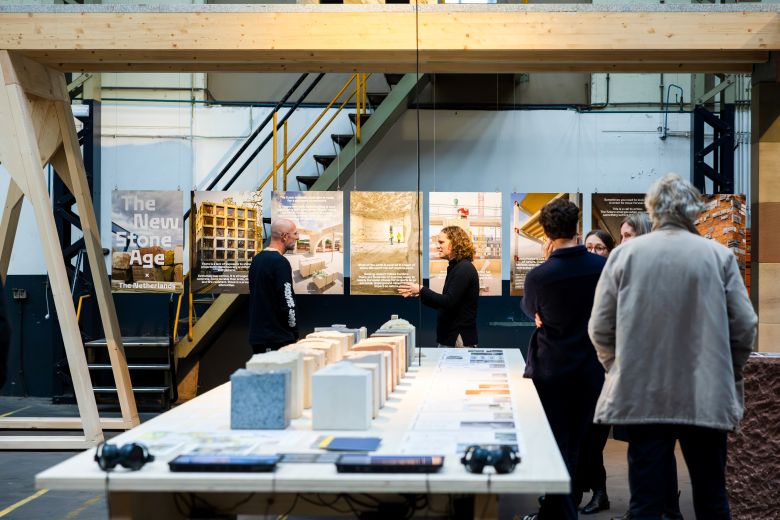



Natural stone is returning to the architectural debate through an approach that goes beyond its conventional use as a cladding or decorative material. The New Age of Stone research project, developed by LMNL office and Studio Anna Zan and presented at the 12th International Architecture Biennale Rotterdam (IABR) 2026, explores how one of the oldest building materials can regain a more prominent role in contemporary construction.
Bringing together architecture, structural engineering, material research and craftsmanship, the initiative examines the potential of natural stone as a structural material, while also exploring new combinations with timber and bio-based materials. Its aim is not to reproduce traditional building methods, but to reconsider stone through contemporary design principles, engineering knowledge and resource-conscious construction.


The project forms part of The New Stone Age x NL, a collaborative installation included in the Biennale’s SYSTEMS OF SUPPORT exhibition. It brings together architects, engineers, stonemasons and stone-sector specialists to investigate how natural stone can contribute to a different approach to the built environment.
From surface material to structural element
One of the central questions raised by the project is whether natural stone can once again become a more widely used component of load-bearing construction.
Despite its long history in architecture and its structural capabilities, stone has largely been reduced in contemporary building practice to façades, cladding, flooring and decorative applications. The development of concrete, steel and other industrially produced materials has transformed construction methods, while gradually limiting the role of traditional stone construction.
The New Age of Stone challenges this established perception. Rather than proposing a return to historical forms of masonry, it examines how the mechanical properties of stone can be combined with contemporary engineering and construction techniques.
The architectural implications are significant. Stone is approached not only as a material that gives a building its visual identity, but also as a potential part of its structural system. This opens up questions about how its weight, compressive strength, durability and material character can influence both building design and construction methods.
New structural approaches and material combinations
The installation presents several experimental construction approaches that seek to expand the structural possibilities of natural stone.
One of them, Augmented Structural Stone, explores the use of inserted tendons to prestress stone components. The technique is intended to improve their performance under bending and extend their potential use in structural elements such as beams and columns. The approach has been developed through the collaboration of Bamberger Natursteinwerk, GROUPWORK and Webb Yates Engineers, combining stone-processing expertise with architectural design and structural engineering.
Another direction focuses on hybrid stone-and-timber systems. These take advantage of the different mechanical properties of the two materials: stone primarily carries compressive forces, while timber contributes to resisting tension.
The use of mechanical connections and dry assembly is particularly relevant, as it creates the possibility of structures that can be dismantled and reused. This approach connects architectural design with circular construction principles, placing greater emphasis on the lifespan of building components and their potential for future use.
Rather than treating stone and timber as competing materials, the project investigates how they can work together within a coordinated structural system.
Exploring new approaches to wall construction
The research also extends beyond load-bearing structures to examine how natural stone can be combined with bio-based insulation materials in contemporary wall assemblies.
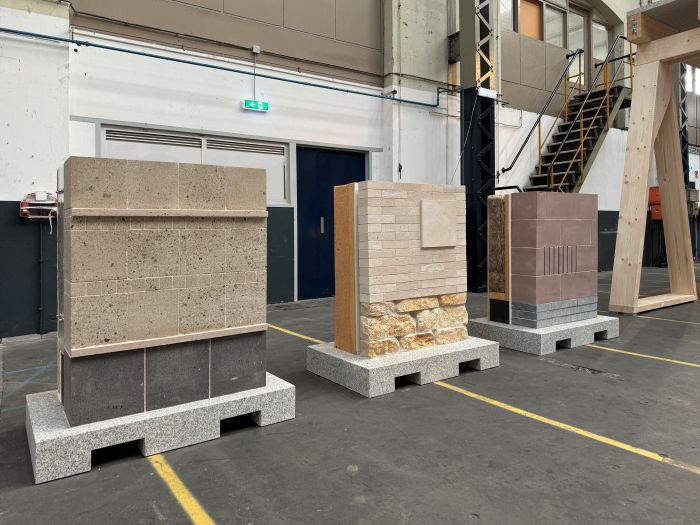
Full-scale mock-ups explore combinations of stone with materials such as wood-fibre insulation, hemp-lime and sheep’s wool. These assemblies investigate how different materials can work together in terms of construction, thermal performance and moisture management.
This aspect of the project highlights another dimension of contemporary stone architecture: the potential to integrate traditional geological materials into building envelopes that respond to current performance requirements.
It also raises design questions about the relationship between stone surfaces, insulation layers, construction details and the architectural expression of external walls.
Regional stone resources and the use of smaller material units
An important part of the initiative is its focus on the geological diversity of Europe and the potential of regionally sourced materials.
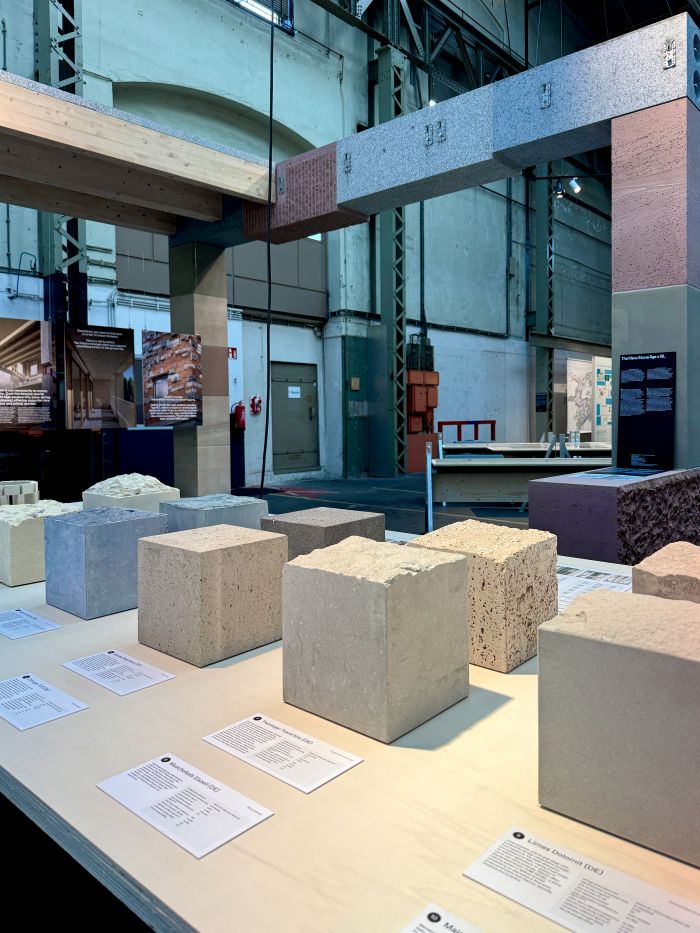
The research examines approximately 20 types of stone sourced within a radius of around 600 kilometres from the Netherlands. These include Kunrader limestone from the Netherlands, Belgian Blue Limestone, basalt lava from Germany, Portland limestone from the United Kingdom and Larvikite from Norway.
The selection reflects an effort to investigate materials that can be sourced from relatively nearby regions, reducing transport distances while reconnecting architectural design with local geological resources.
The installation also presents stone bricks and smaller building units produced from material that may not be suitable for larger slabs. This approach highlights the potential to make better use of blocks and offcuts that would otherwise have limited applications in conventional stone processing.
For the natural stone industry, this is an important aspect of the research. It suggests new possibilities for connecting quarrying and processing operations with architectural applications, while exploring ways to increase the value obtained from extracted material.
Environmental considerations and the challenges ahead
The environmental dimension is central to The New Age of Stone. Natural stone requires relatively little processing compared with some industrial construction materials, has a long service life and can potentially be reused in subsequent applications.
However, its environmental performance cannot be assessed independently of the wider supply chain. Quarrying, processing, handling and transportation all influence the overall impact of a stone construction project. Its weight makes transport distances particularly relevant, which is one reason why the research places emphasis on regional sourcing.
The project therefore considers sustainability not simply as an inherent property of the material, but as the result of decisions about extraction, material selection, construction design, lifespan and reuse.
The broader challenge is to establish whether these experimental approaches can be translated into technically reliable and economically viable construction systems. Structural performance, standardisation, building regulations and the availability of appropriate expertise will all influence their potential adoption.
A wider perspective for architecture and the natural stone industry
The New Age of Stone is more than an exploration of the historical role of natural stone in architecture. It brings together traditional material knowledge, contemporary engineering and new design approaches to reconsider how stone can contribute to the built environment.
For architects and designers, the project opens up new ways of thinking about the relationship between material, structure and architectural expression. For the natural stone industry, it highlights potential applications beyond established markets, including structural components, smaller building units and the more effective use of processing offcuts.
It also underlines the importance of closer cooperation between stone producers, architects, engineers and construction professionals. The wider adoption of structural stone will depend not only on the material’s properties, but also on the development of suitable technical specifications, testing procedures and construction methods.
The project’s contribution lies in bringing these questions into the contemporary architectural debate and demonstrating, through full-scale prototypes and material studies, how natural stone could be reconsidered as part of future construction systems.
The New Stone Age x NL is presented as part of the SYSTEMS OF SUPPORT exhibition at Piekfabriek, Rotterdam, which runs until 29 November 2026.