




Sustainability has now become a strategic tool for risk management and long-term value preservation in the construction sector. Beyond low CO₂ emissions, durability, ESG criteria, thermal performance and architectural quality shape projects that deliver strong economic returns, secure easier financing and remain competitively relevant for decades. The conversation around building sustainability has shifted dramatically. While in the past we focused primarily on operational energy consumption, today the international technical community has adopted a far more comprehensive approach: the drastic reduction of CO₂ emissions across the entire life cycle of a building – from the extraction and processing of materials all the way to its end of life.
The new life-cycle logic (Life Cycle Assessment – LCA) places construction materials at the very centre of sustainability. Greek marble, one of the most emblematic materials of Greece, is emerging as a leading protagonist in this transition. With its exceptional durability, full recyclability and modern production practices that continuously reduce its environmental footprint, marble is no longer limited to carbon-neutral performance. It can actively contribute to climate-positive buildings – structures that deliver an overall positive environmental impact.


As a natural stone, marble inherently offers significant advantages over synthetic or heavily industrialised materials. Recent LCA studies show that its embodied carbon is comparatively low, while its service life spans centuries – as vividly demonstrated by the Pentelic marble of the Parthenon. This translates into fewer replacements, lower consumption of new resources and a dramatic reduction in the overall carbon footprint over time.
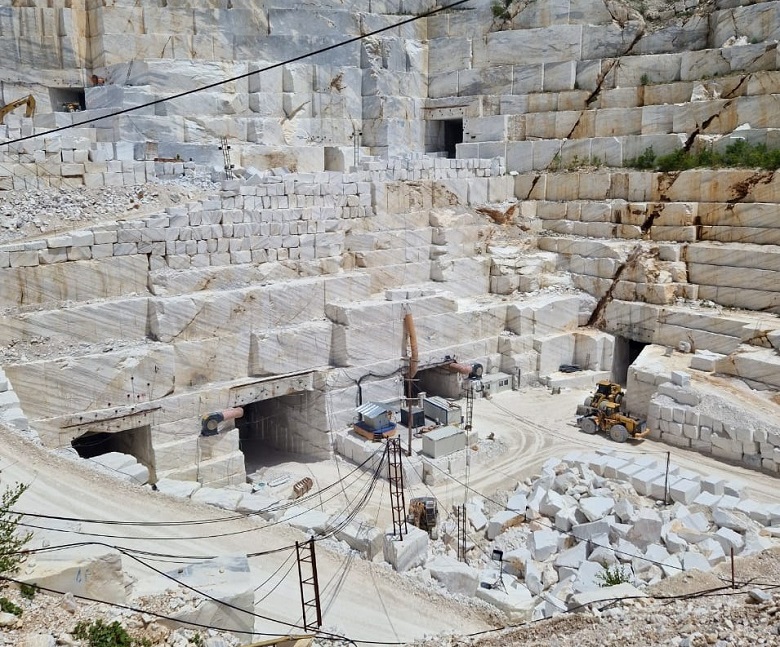
Pioneering Greek companies now produce marble slabs with EPD (Environmental Product Declaration) certification for 2 cm and 3 cm thicknesses. They have already integrated the requirements of LEED and other green rating systems. At the same time, quarrying companies have installed solar panels at their sites and implement ISO 14001 environmental management standards, further lowering energy consumption and emissions during extraction and processing.
The transition to climate-positive construction requires collaboration from the very first stages of design. Early Contractor Involvement (ECI) allows marble producers to work directly with architects, structural engineers and contractors. This optimises slab dimensions, minimises material waste and ensures the selection of the most suitable marble varieties (Pentelic, Dionysos, Volakas, etc.) according to the project’s climatic and functional requirements.
The durability of marble is not merely aesthetic. It drastically reduces maintenance and repair needs, thereby lowering the Total Cost of Ownership (TCO) and the indirect CO₂ emissions associated with upkeep. In addition, marble possesses high thermal mass, contributing to passive heating and cooling and helping reduce the building’s operational energy demand.
At the end of its life cycle, marble is 100 % recyclable: it can be crushed and reused as aggregate in concrete, mortars or new products. Even the sludge generated during processing is already being valorised in eco-friendly materials, reducing the need for virgin raw materials and preventing landfill disposal.
Today, buildings with low life-cycle carbon footprints enjoy a clear competitive advantage in the market. Investors and institutional bodies increasingly favour projects that meet strict ESG criteria. Greek marble, sourced locally, reduces transport-related emissions, supports the national economy and offers timeless aesthetics that preserve property value for generations.
The construction industry in Greece and across Europe is called upon to adopt an integrated approach: sustainable materials, intelligent design and close collaboration. Greek marble – with its innovative quarrying practices, LCA certifications and unparalleled durability – is no longer just a traditional material. It is a material that helps us move from carbon-neutral to climate-positive, creating buildings and cities that do not merely respect the environment but actively enhance it.
With materials such as Greek marble, the cities of tomorrow can be more resilient to climate change, more efficient and more beautiful – for the generations to come.