

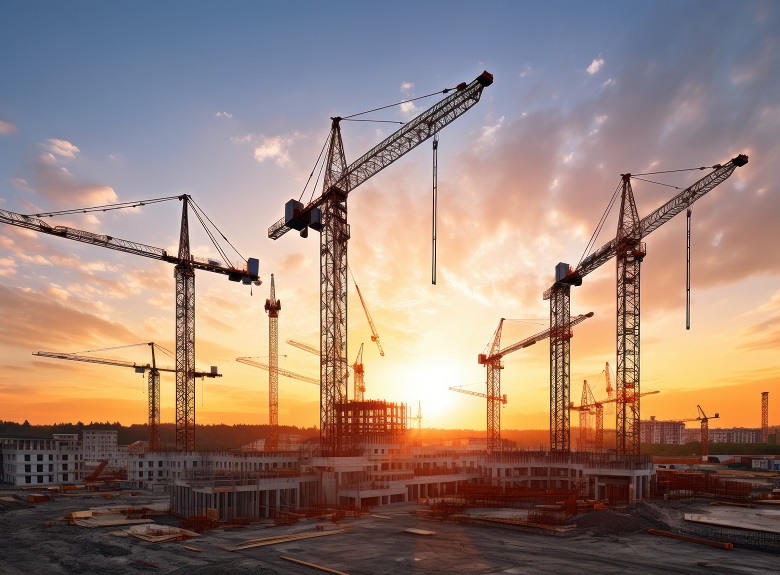



The year 2026 is shaping up as a period of measured optimism for the global construction industry. After several years marked by volatility, elevated interest rates, and cost pressures, the sector does not appear to be returning to rapid expansion. Instead, it is entering a phase of cautious, selective growth, with greater emphasis on resilience and efficiency.
Overall, construction activity is expected to grow moderately, supported less by volume and more by project quality, technology adoption, and disciplined risk management.


Key Drivers Supporting Activity
Despite ongoing uncertainty, several areas continue to sustain demand across global markets:
-
Digital infrastructure: The rapid expansion of artificial intelligence and cloud services is driving sustained investment in data centers and the associated energy and network infrastructure.
-
Energy transition: Renewable energy projects, power networks, water infrastructure, and grid upgrades remain core pillars of construction activity.
-
Public infrastructure: In many regions, government-backed infrastructure programs continue to provide stability, offsetting weakness in private development.
-
Healthcare and advanced manufacturing: Hospitals, research facilities, and reshoring-driven manufacturing projects offer targeted growth opportunities.
Residential construction remains more uneven, although selective markets may see gradual recovery as financing conditions stabilize.
Technology and Productivity Take Center Stage
Rather than being defined by higher volumes, 2026 is increasingly about how projects are delivered. Margin pressure and labor shortages are accelerating the adoption of new approaches:
-
Off-site and modular construction are gaining traction, particularly in public-sector, healthcare, and multifamily projects, due to speed and cost control advantages.
-
Digitalization and AI are being used to improve planning, scheduling, and project management, reducing delays and inefficiencies.
-
Automation and robotics are beginning to address productivity gaps in specific construction activities.
At the same time, sustainability is becoming embedded in mainstream decision-making, with growing attention to low-carbon materials, circular construction practices, and whole-life carbon assessment.
Persistent Challenges
The outlook for 2026 remains constrained by several structural challenges:
-
Acute labor shortages, especially in skilled trades.
-
Ongoing cost pressures, with material and energy prices still elevated compared to pre-pandemic levels.
-
Economic and geopolitical uncertainty, affecting investment confidence and project viability.
These factors make careful project selection and execution more critical than ever.
From Growth to Resilience
The defining theme for construction in 2026 is a shift from pure growth to resilience and operational discipline. Success is less about pursuing scale and more about building robust business models. Companies best positioned for the year ahead will be those that:
-
manage risk proactively,
-
maintain strict cost control,
-
invest in technology and modern construction methods.
In an environment where growth exists but is far from guaranteed, 2026 is likely to reward strategic thinking, adaptability, and a long-term perspective.