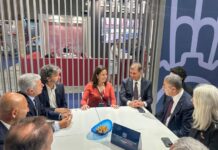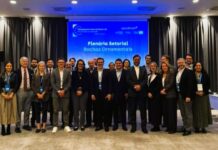


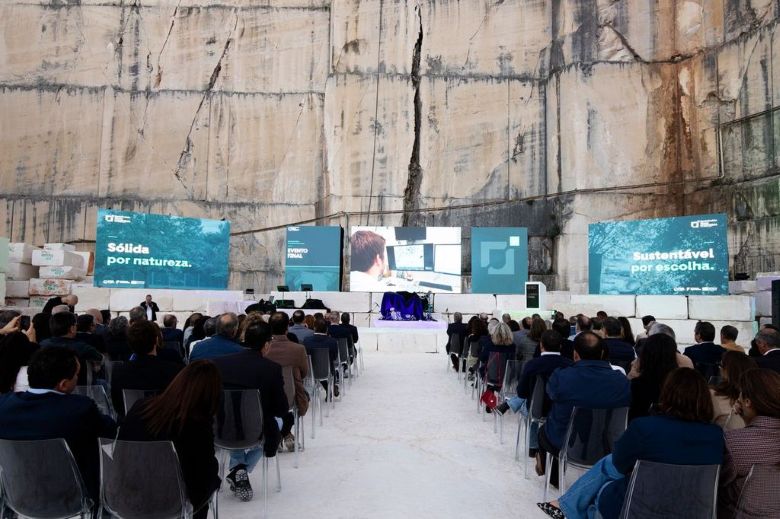



Solancis led the future of this Agenda, which culminated in a memorable evening presenting its results and an unprecedented concert in the heart of a Quarry.
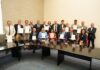
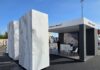
∙ The sector’s leading company hosted the Final Event of the Sustainable Stone by PORTUGAL Agenda at the Vale da Moita Quarry—the largest innovation and sustainability project in the history of national natural stone.


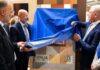
∙ Featuring a standout address by the CEO, who opened in a relaxed tone invoking “The Lion King,” the event celebrated five years of consortium work, with the official closing led by the Minister of Economy and Territorial Cohesion, Manuel Castro Almeida.
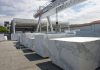
∙ A historic evening that culminated in an unrepeatable natural setting: stone blocks transformed into a stage for the performance of the Stone Groove Big Band and countertenor João Paulo Ferreira.
Solancis was proud to serve as the “home” and leading company of what is the largest project ever undertaken in Portugal’s natural stone sector. The Vale da Moita 1 Quarry, in Arrimal (Porto de Mós), was the premier venue for the Final Event of the Sustainable Stone by Portugal Agenda—a mobilizing initiative funded by the Recovery and Resilience Plan (PRR) and European NextGenerationEU funds. It brought together 52 entities—including companies, research centers, universities, and associations—around innovation, green transition, and industry competitiveness.
Innovation, Technology, and the Three Fundamental Pillars
The agenda was born with a clear mission: to modernize the sector based on three fundamental dimensions— People, Environment, and Economy. Through research, development, and testing activities, the consortium transformed real industry needs into high-value technological solutions.
With an overall investment of €68.9 million (including nearly €40 million in PRR incentives), management was handled by the Cluster Portugal Mineral Resources, under the executive direction of Marta Peres. The presentation of the structural outcomes from five years of cooperation highlighted the development of 29 new technological solutions (including 11 strategic products, processes, and services), the filing of 11 patents, and the direct participation of around 600 people, 286 of whom were researchers.
The prototypes developed span the entire value chain—from mining extraction (featuring hybrid and 100% electric mobile cutting machinery) to factory logistics and the repurposing of blocks and slurry. This joint effort has reinforced the internationalization of Portuguese stone, driven clear goals for decarbonization, value addition, and exports, and established a solid foundation of cooperation that prepares the industry for the challenges of the new European financial framework, consolidating Portugal at the forefront of ornamental stone worldwide.
Key Statements
The institutional session featured the notable presence of the Minister of Economy and Territorial Cohesion, Manuel Castro Almeida, who officially closed the proceedings, emphasizing the strategic importance and dynamism of the sector. The speeches also included addresses by the President of the Cluster, Luís Martins, and the Vice President of IAPMEI, as part of a program that also featured figures such as Pedro Dominguinhos (National Monitoring Commission of the PRR), Fernando Alfaiate (Mission Structure Recover Portugal), and Liliana Santos (Directorate-General for Energy and Geology).
During the opening session, Samuel Delgado, CEO of Solancis and leader of the consortium, highlighted the symbolism of hosting the event in an active quarry:
“Quarries are often talked about in terms of negative impact. We wanted to bring people into our home so they could see with their own eyes what a quarry is today, where the vast majority of equipment already operates on electricity, reflecting a strong commitment to sustainability.”
For his part, Luís Martins, President of the Mineral Resources Cluster of Portugal (coordinating entity), underscored the resilience and permanence of geological resources:
“Natural stone is the only construction material that was already prepared before we existed. Choosing stone today means choosing durability over disposability, giving buildings a unique identity that no industrialized material can replicate.”
Nuno Gonçalves, Vice President of IAPMEI, emphasized the execution capacity of Portuguese companies: ” We reach 2026 with 51 mobilizing agendas on the ground and 100% of milestones and targets met. This proves that Portugal possesses top-level planning, coordination, and execution capabilities.”
The institutional closing was conducted by the Minister of Economy and Territorial Cohesion, Manuel Castro Almeida, who praised the sector’s dynamism and the strong articulation between the business community and the scientific/technological system:
” Natural stone is not an economic activity detached from the territory. When these companies grow, export, and invest, they anchor populations, generate income, and sustain local economies in areas often far removed from major urban centers.”
An Unforgettable Autumn Evening: Music Resonates in the Quarry
The celebration extended to the local community with a cultural spectacle of rare beauty. Designed using organically arranged stone blocks, an improvised stage hosted a free public concert at the end of the day.
Under the autumn sky, the Stone Groove Big Band, accompanied by special guest and acclaimed countertenor João Paulo Ferreira, delivered an unforgettable performance. The fusion between the industrial robustness of ornamental stone and musical sophistication created a perfect symbiosis, leaving an indelible mark on the memory of all attendees and celebrating the future of Portuguese natural stone through art and unity.