

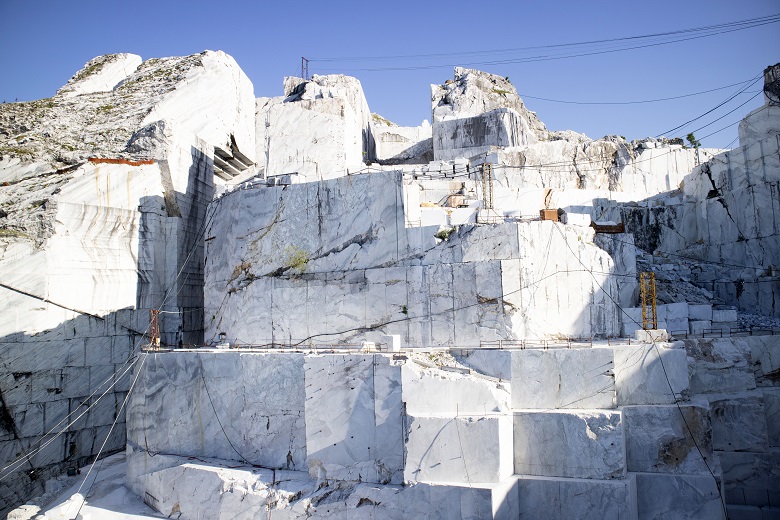



The City Council of Massa has officially approved the Basin Executive Plans (Piani Attuativi di Bacino – PAB) for quarrying basins No. 9 “Valsora” and No. 11 “Carchio Caprara Madielle,” marking a structured update to the local extraction framework.
Passed with 21 votes in favor and 6 against, the resolution establishes clear planning criteria for stone operators while aligning operations with municipal guidelines and Tuscany’s Regional Landscape Plan (Piano Paesaggistico).


Framework and Operational Objectives
The Basin Executive Plans serve as technical tools to determine sustainable extraction volumes, map precise quarry boundaries, and set operational requirements. The municipal administration aims to eliminate licensing uncertainties, ensuring operational continuity for local companies while enforcing environmental, hydrogeological, and landscape protection standards across the Apuan Alps.
Speaking before the council, Deputy Mayor Alice Rossetti highlighted the regulatory scope of the decision:
«Quarrying is an integral part of our territory’s history, economy, and employment structure. These plans establish the regulatory framework required for activity to continue. The core issue is not whether extraction should exist, but how it is planned and under what conditions, ensuring predictability for operators and compliance with environmental laws.»
Market Relevance and Supply Chain Stability
The approval carries relevance beyond the municipality of Massa. The Massa-Carrara quarrying district remains a primary global hub for white and veined marble varieties—such as Carrara, Calacatta, and Bardiglio—widely specified in international high-end architecture and construction projects.
By securing a stable regulatory environment, the new plans provide local quarry operators with the clarity needed for long-term investment planning, supported by ongoing institutional monitoring of environmental and socio-economic impacts.