





The European Union is redefining its industrial strategy through measures aimed at reinforcing domestic manufacturing, promoting low-carbon technologies, and safeguarding the European market. Within this framework, the European Commission’s proposed Industrial Accelerator Act (IAA) sets new parameters for sectors designated as strategically critical.
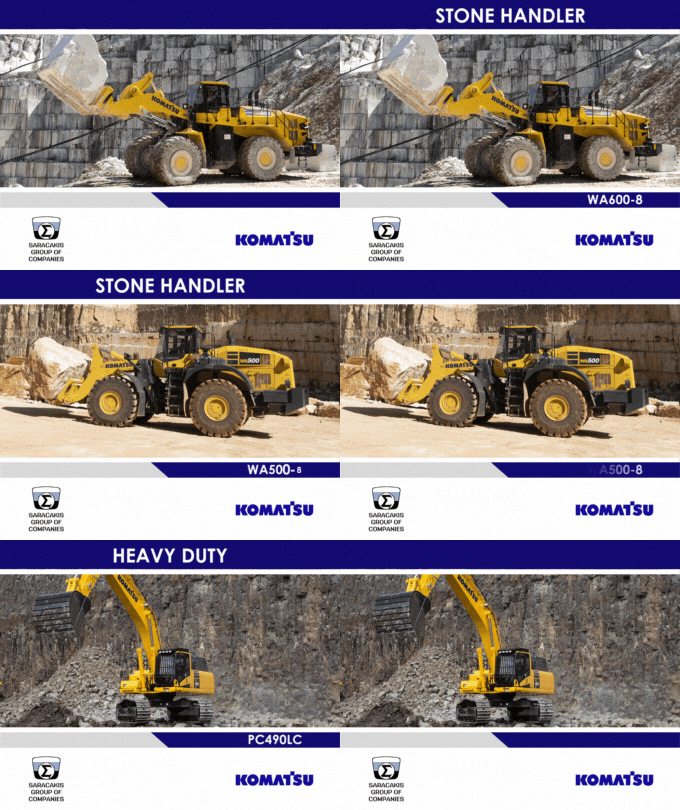
However, the draft proposal does not include machinery for the quarrying, cutting, and processing of natural stone among the categories benefiting from specialized protection. This decision reflects the Commission’s targeted priorities while shaping the broader landscape for international competition among equipment manufacturers.


Scope of the Industrial Accelerator Act (IAA)
The draft Industrial Accelerator Act focuses on specific sectors deemed essential by the European Commission for the green transition. The proposed framework introduces European-origin preference criteria (“Union-origin”) and sustainability benchmarks for public procurement and subsidies, concentrated across three core pillars:
-
Energy-Intensive Industries: Low-carbon production for steel, aluminum, and cement.
-
Net-Zero Clean Tech: Batteries, photovoltaics, wind turbines, and critical raw materials.
-
Automotive Industry: Electric vehicles and their associated supply chains.
Industrial stone-processing equipment — including CNC machinery, diamond wire systems, waterjet cutters, and wastewater filtration units — was omitted from the annex, as the Commission opted for a strictly delimited scope.
Global Competition and Market Perspectives
The absence of stone machinery from the IAA’s protective framework impacts market balances relative to imports from third countries, most notably China, which represents one of the world’s largest manufacturers and exporters of industrial equipment:
-
The European Equipment Manufacturers’ Perspective: Machinery builders in countries with a long-standing manufacturing tradition, such as Italy, Spain, and Portugal, point out that the absence of “Made in EU” criteria or environmental mandates in public procurement leaves the European market fully exposed to competition from Chinese and other lower-cost imports.
-
The Stone Processors’ Perspective: Conversely, natural stone producers and processing enterprises — including major marble quarrying operators — view the absence of tariff or regulatory import restrictions as a factor preserving broad sourcing flexibility. This enables processing facilities to select equipment from global suppliers based strictly on financial and technical criteria.
Ongoing Legislative Process
The Commission’s proposal is currently under consideration through interinstitutional negotiations (EU Trilogue) between the European Parliament and the Council of the EU.
During this phase, European industry associations are presenting their positions. Some advocate for an expanded scope to cover industrial machinery against external competition, while others support maintaining a focused framework restricted to primary energy-intensive sectors.
Outlook
The evolution of the Industrial Accelerator Act highlights the balance European industrial policy must maintain between protecting domestic technological production and preserving the competitiveness of stone-processing enterprises. The final decisions reached by EU institutions in the coming months will define the regulatory framework governing the sector’s global supply chain.