


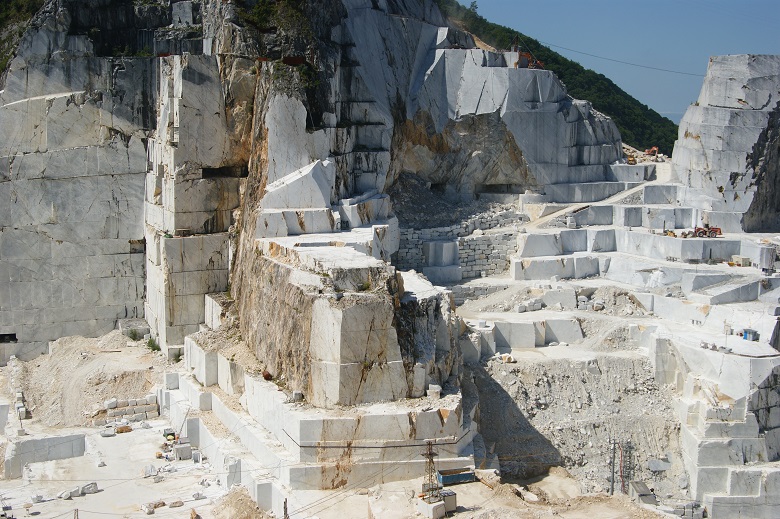



Marble is one of the most well-known and timeless natural materials, closely linked to the history of art and civilization. From ancient Greek and Roman sculptures to Renaissance masterpieces, marble has left an indelible mark on global cultural heritage. However, its value goes far beyond art alone. It is an extremely versatile material, widely used in many areas of human activity.
The uses of marble can be summarized into five main categories: art, the construction industry, urban planning, objects and furnishings, and industry.


Art
The most famous use of marble is in the creation of works of art. Sculptures, reliefs, architectural elements, decorative objects, and monuments are often crafted from marble due to its durability and aesthetic qualities.
Marble also plays an important role in funerary art. Tombs, gravestones with engraved or relief dedications, decorative cemetery elements, small chapels, household shrines, and religious structures are all examples of how marble is used to honor memory and tradition.
Construction Industry
Marble is widely used in the construction industry, both for structural and decorative purposes. It is highly appreciated for its elegance and resistance over time. Floors, wall claddings, columns, gates, staircases, fireplaces, window sills, and balconies are among the most common architectural elements made of marble.
Thanks to its natural beauty and variety of colors and patterns, marble is suitable for both classical and modern architectural designs.
Urban Planning
Marble is also a popular material in urban planning. It is used in monuments, squares, paved streets, fountains, sidewalks, benches, gates, and statue bases. Its resistance to weather conditions and timeless appearance make it ideal for outdoor public spaces.
Urban structures made of marble can be found all over the world, contributing to the identity and aesthetic value of cities.
Objects and Furnishings
The elegance of marble makes it an excellent material for furniture and decorative objects. It is widely used in homes, offices, hotels, restaurants, bars, shops, and public facilities such as schools, hospitals, and museums.
Marble is commonly found in tables, kitchen countertops, lighting fixtures, vases, planters, storage elements, and various decorative items, combining functionality with refined design.
Industry
Marble is also suitable for industrial applications thanks to its versatility. Production waste is transformed into calcium carbonate powder, which is reused in many sectors. Calcium carbonate is used as an abrasive material, for example in toothpaste, as a base for cosmetics and pharmaceutical products, in pigments and paints, and in the production of paper, glue, plastic, and insulating materials.
It is also used in the food industry and in systems designed to reduce emissions from coal-fired power plants, highlighting marble’s contribution to modern and sustainable industrial processes.
Source: www.carraramarbletour.it