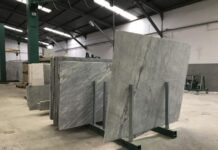


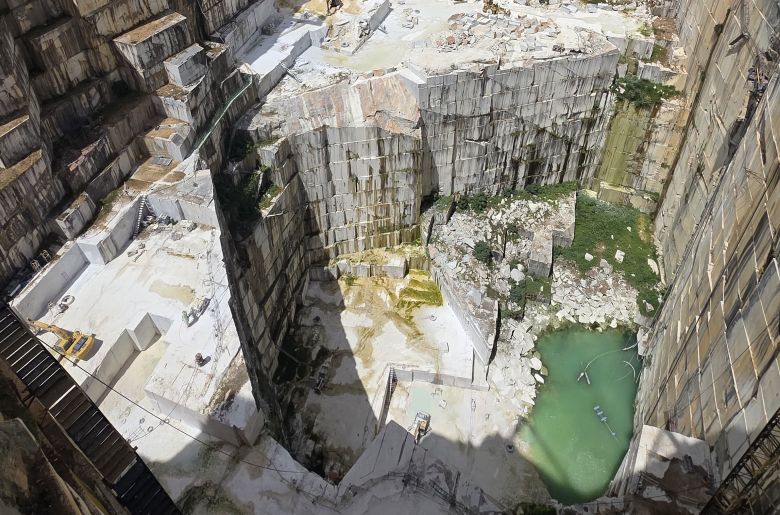



Portugal’s ornamental stone industry recorded a turnover of €1.274 billion and employed 14,288 people in 2024, making it the largest employment segment within the country’s broader mineral resources industry. The figures come from a new study by Nova School of Business and Economics (Nova SBE), commissioned by Assimagra, the Portuguese association representing companies in the sector, to assess the economic and social contribution of the mineral resources industry to the national economy.
The study, entitled The Socioeconomic Impact of the Mineral Resources Industry in Portugal, examines four main segments: metallic ores, construction minerals, industrial minerals and ornamental stones. The latter includes the extraction and processing of marble, granite and other natural stones.


More than 2,000 companies operating in the sector
According to Nova SBE’s findings, Portugal’s ornamental stone industry comprised 2,017 companies in 2024. Their combined turnover reached €1.274 billion, while total production amounted to €1.217 billion. Gross value added (GVA) stood at €516 million, with total employee remuneration reaching €228 million.
The sector employed 14,288 people, making it the largest employer among the four segments examined in the study. These figures highlight the importance of both quarrying and processing activities, with the latter representing a substantial part of Portugal’s natural stone production base.
Marble and granite processing accounts for a significant share of activity
A breakdown of the individual economic activities shows the strong presence of processing within the Portuguese market.
The manufacture of marble and similar stone products recorded turnover of €598.1 million and employed 6,681 people. Meanwhile, the manufacture of granite and other stone products generated €334.95 million in turnover, with a workforce of 4,288.
On the extraction side, marble and other carbonate rock quarrying recorded turnover of €127.81 million and employed 953 people. Ornamental granite and similar stone extraction generated €212.55 million in turnover, with 2,337 employees.
The figures underline the importance of processing within the sector’s value chain. The two main manufacturing categories, covering marble and granite products, account for the largest shares of both turnover and employment.
The position of natural stone in the national economy
The sector’s importance is also reflected in its contribution to Portugal’s wider economy. In 2024, ornamental stone companies accounted for 0.22% of total national business turnover, 0.31% of national production and 0.33% of gross value added. Their share of total national employment stood at 0.29%.
The study also examines the overall economic impact of the mineral resources industry, taking into account not only the direct activity of companies but also the effects generated across suppliers, related business activities and household consumption supported by employee income.
For the mineral resources industry as a whole, total production impact was estimated at €7.114 billion in 2024, compared with €2.601 billion in direct production. Its total contribution to gross value added reached €3.260 billion, while the industry supported 73,834 jobs when indirect and induced effects are included.
These figures, however, refer to the entire mineral resources industry and not exclusively to ornamental stones. As Nova SBE explains, the assessment of total economic impact was conducted at a broader level in order to protect the confidentiality of available business data and ensure the reliability of the estimates.
A contribution to understanding the sector
The research draws on data from Portugal’s National Statistics Institute (INE), through its Integrated Business Accounts System (SCIE), as well as information collected directly from companies operating in the industry. The assessment of wider economic effects was carried out using an input-output methodology, supported by the eTrace tool.
The initiative by Assimagra and the scientific analysis undertaken by Nova SBE provide a more comprehensive picture of the mineral resources industry’s position in the Portuguese economy, with particular attention to the role of ornamental stones. For the natural stone sector, the 2024 figures point to a production base comprising more than 2,000 companies, substantial processing activity and thousands of jobs.
Beyond measuring the sector’s economic scale, the study establishes a documented reference point for assessing its contribution and supporting the development of future industry strategies.