

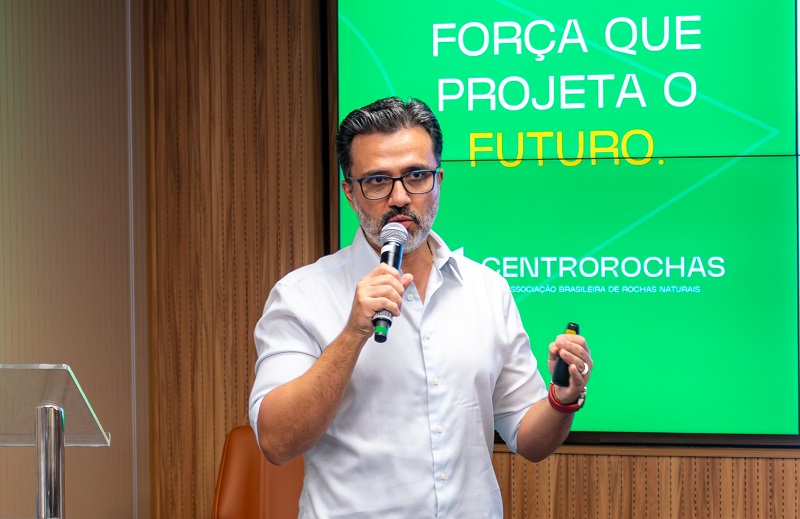



The Vice President of the Brazilian Center of Natural Stone Exporters speaks to stonenews.eu about Centrorochas’ role, the Brazilian natural stone sector, U.S. tariffs, Marmomac Brazil, and international prospects in the U.S. and Europe.
Brazil is one of the strongest players in the global natural stone market, boasting unique geodiversity, a leading position in quartzite, and a growing presence in high-value markets. In a period marked by geopolitical and trade challenges — exemplified by recent U.S. tariffs — the role of institutional bodies representing the sector internationally is particularly important.


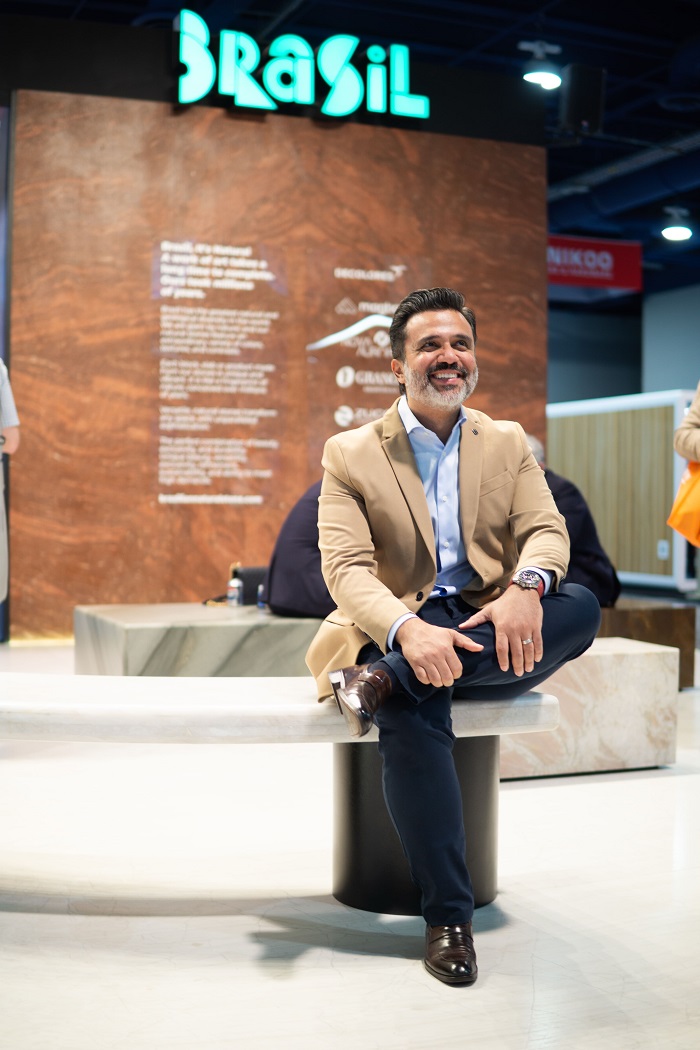
In the following interview, Fábio Cruz, Vice President of the Brazilian Center of Natural Stone Exporters (Centrorochas), discusses the organization’s strategy, the current state of the Brazilian natural stone sector, developments in international trade, and Brazil’s prospects in the U.S. and European markets.
 Interview
Centrorochas and Its Strategic Role
Mr. Cruz, what is the core role of Centrorochas in promoting Brazilian natural stone exports, and how do you support member companies in strengthening their international presence?
Centrorochas plays a fundamental role in strengthening Brazil’s natural stone sector, acting in an integrated manner both in the domestic market and internationally. In Brazil, the association works on institutional representation, advocacy, and enhancing companies’ competitiveness, laying the foundations for a consistent and sustainable international presence.
Abroad, Centrorochas coordinates the It’s Natural – Brazilian Natural Stone program in partnership with ApexBrasil, promoting sector-wide initiatives and supporting Brazilian companies in key global markets through international trade fairs, business missions, demand-generation activities, and market intelligence. This joint effort allows Brazilian companies to expand their international presence with a focus on value, positioning, and differentiation, highlighting Brazil’s geodiversity, leadership in materials such as quartzite, and the country’s ability to compete globally.
Current State of the Brazilian Natural Stone Industry
How would you describe the current situation of Brazil’s natural stone industry, the main challenges it faces, and the key demand trends shaping the market today?
Brazil’s natural stone industry is experiencing a period of stability and transformation. The country remains a leading global player, supported by a robust production base and the world’s greatest geodiversity, with more than 1,200 cataloged materials. This diversity gives Brazil a unique position in the international market, as each natural stone is one-of-a-kind, with irreproducible geological characteristics.
Brazil is the world’s largest producer and supplier of quartzite — a material that has gained popularity recently due to advances in industrial processing technologies. These developments have expanded the use of quartzite in high-end projects, particularly in premium residential and commercial segments, and I believe these materials are currently shaping market trends.
In terms of challenges, the sector faces conditions typical of today’s international environment: geopolitical instability, trade barriers, high logistics costs, and the ongoing need for efficiency gains and workforce qualification. Nevertheless, Brazil’s natural stone industry has proven resilient and continues to advance steadily, as evidenced by the historic export record achieved in 2025, despite a more complex global context.
Marmomac Brazil and International Trade Fairs
How important is Marmomac Brazil for showcasing the Brazilian natural stone sector, and what are the main objectives of Centrorochas through its participation in this year’s edition?
Marmomac Brazil plays a central role in Brazil’s international positioning in the natural stone sector. At the beginning of last year, Brazil had the honor of hosting the first edition of Marmomac held outside Europe, a historic milestone that established the country as the host of one of the most important international trade fairs in the sector.
For us, the fair is much more than a commercial platform. It has proven to be a strategic tool for promoting knowledge and connecting the sector with audiences that are decisive for demand generation. Our goal is to go beyond technical discussions and link Brazil’s productive ecosystem with strategic audiences beyond the traditional technical core, such as architects and designers, who select materials and transform natural stone into real experiences of living and social interaction.
U.S. Tariffs and International Trade Policy
How does Centrorochas assess the partial exemption of HTSUS code 6802.99.00 from the additional U.S. tariffs, and what does this mean in practical terms for Brazilian natural stone exports?
The partial exemption of HTSUS code 6802.99.00 was an important step forward, resulting from consistent technical and institutional advocacy efforts. In practice, the measure helped preserve the competitiveness of a significant share of Brazilian natural stone exports to the United States, especially higher value-added materials.
At the same time, since this was only a partial exemption — with marbles, granites, and slates still subject to additional tariffs — the outcome could have been even more positive. This scenario reinforces the importance of Centrorochas’ ongoing engagement in dialogue with U.S. authorities and stakeholders to seek more balanced trade conditions for the sector in the long term.
Partnerships with U.S. Organizations
What strategies and partnerships has Centrorochas developed with U.S. organizations such as the Natural Stone Institute (NSI) and the National Association of Home Builders (NAHB) in response to the tariff measures?
Centrorochas already maintained institutional relationships with U.S. organizations such as the NSI and the NAHB, which were intensified immediately after the announcement of the tariffs. The joint work focused on aligning information, exchanging data, and building shared technical arguments to demonstrate the complementary role of Brazilian natural stones in the U.S. residential construction supply chain, as well as the local market’s dependence on imports and the impact of tariffs on costs, timelines, and competitiveness.
This coordinated effort, combined with direct investment by the Brazilian sector, supported by 30 companies, in hiring a U.S.-based institutional relations firm, helped qualify the dialogue with stakeholders and authorities, strengthening an ongoing advocacy agenda grounded in data and institutional cooperation.
Next Steps for Full Tariff Exemption
What are the next steps Centrorochas is pursuing toward achieving a full exemption for all natural stone categories and safeguarding international competitiveness?
We are focused on achieving a full exemption from tariffs for all natural stone categories, with immediate emphasis on extending the list of exceptions to materials that remain affected. The strategy is supported by technical arguments and data demonstrating that Brazilian natural stones do not compete with domestic U.S. production, but rather play a complementary role in the residential construction supply chain, contributing to competitiveness, supply security, and stability of the U.S. market.
Impact of U.S. Tariffs on Construction Costs
Given the increase in construction costs in the United States resulting from the tariffs, how do you assess the impact both on American consumers and on the Brazilian natural stone industry?
When construction costs rise, the U.S. market tends to reorganize its priorities. Lower-margin or more price-sensitive projects may be postponed, primarily affecting more standardized or less differentiated materials. Higher value-added materials, such as many Brazilian quartzites, tend to maintain demand, as they are associated with premium projects in which stone represents a smaller share of total construction cost.
For the Brazilian industry, the greater risk lies in a loss of competitiveness driven by higher interest rates rather than a decline in demand. The U.S. market continues to rely on imported natural stone, as it lacks domestic production for specific applications such as kitchen and bathroom countertops. When costs increase, the most common effects are margin compression, contract renegotiations, and logistical adjustments, rather than product substitution. Should substitution occur, it would require a reassessment of strategies, with greater emphasis on differentiation and higher value-added materials.
Future Plans of Centrorochas
What are Centrorochas’ future plans for developing Brazil’s natural stone sector and further strengthening its international presence?
Centrorochas’ future plans are focused on strengthening the sector’s competitiveness in Brazil and expanding its international presence in a structured manner. In addition to targeted promotion and institutional articulation in traditional markets, the association is advancing strategic projects such as the Brazilian Natural Stone Hub in the United Arab Emirates, which aims to create a permanent platform for positioning, relationship-building, and business generation, with a focus on value-added and a long-term vision.
Brazil’s Position in the Global Market
How do you see Brazil’s position in the global natural stone market evolving over the coming years?
I see Brazil’s position in the global natural stone market strengthening consistently over the coming years, driven by the country’s unique geodiversity, its leadership in quartzite, technological advancements, and a greater focus on value-added and sector positioning. Currently, a significant share of our natural stones reaches the final consumer through global processing and distribution chains, which reinforces the quality and attractiveness of Brazilian material. The next step is to increase recognition of Brazilian origin within these international flows, adding even more value to the product.
As a result, Brazil is expected to move beyond being perceived merely as a volume supplier and consolidate its role as a global reference in high-end natural materials, aligned with demands for authenticity, sustainability, and differentiation in architecture and design.
European Market and EU-Mercosur Agreement
Europe remains a key market for Brazilian natural stones. How do you believe the EU–Mercosur agreement will affect exports, and what opportunities or challenges does it create for Centrorochas member companies?
Europe remains a strategic market for Brazilian natural stones, and the EU-Mercosur agreement tends to make trade more fluid and predictable. For companies associated with Centrorochas, this creates opportunities to expand business and strengthen long-term commercial relationships.
At the same time, the agreement reinforces the importance of sustainability and transparency. Brazil has made consistent progress, particularly through its role in the Global EPD project, developed within the framework of the Natural Stone Strategic Alliance (NSSA), an international federation of which Brazil is a founding member. The initiative aims to establish natural stone as a low-carbon building material, based on verifiable technical data. Brazil’s leadership in this process helps companies prepare to meet European environmental requirements and turn sustainability into a competitive advantage.
Competitive Advantages and Challenges
In your view, what are the strongest competitive advantages of the Brazilian natural stone industry, and which key challenges must be addressed in order to remain competitive at a global level?
Brazil’s natural stone industry brings together unique competitive advantages. The main one is its geodiversity — the largest in the world, with more than 1,200 cataloged materials — which allows Brazil to offer an aesthetic and geological variety unmatched by any other country. This is complemented by global leadership in quartzite. Another important differentiator is production scale combined with industrial capacity, with consolidated hubs and a value chain that runs from mining to the final exported product, serving demanding markets such as the United States and Europe. The sector has also been advancing in technology and sustainability, preparing to respond to new regulatory and market requirements.
The main challenges lie in maintaining competitiveness in an increasingly complex global environment, marked by high logistics costs and occasional trade barriers. To remain competitive, the Brazilian industry must continue to advance in positioning, differentiation, efficiency, and regulatory predictability, turning its natural advantages into lasting commercial strengths.