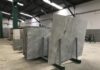





From espresso machines to bespoke objects, natural stone is finding new applications through the convergence of traditional craftsmanship and contemporary industrial design.
Natural stone has long been associated with architecture, sculpture and interior design. However, its role in contemporary design is gradually extending beyond these established fields, as designers and manufacturers explore new ways of incorporating marble into everyday objects and specialised products.


An example of this development comes from Italy, where La Marzocco, through its bespoke atelier Officine Fratelli Bambi, has collaborated with Luce di Carrara, the product division of the Henraux Group, to introduce marble into the customisation possibilities of its Linea Mini espresso machine.
The project brings together two distinct Tuscan manufacturing traditions, combining the technical expertise of espresso machine production with the craftsmanship and material knowledge associated with Carrara and the wider Versilia marble district.
 Marble becomes part of the product design
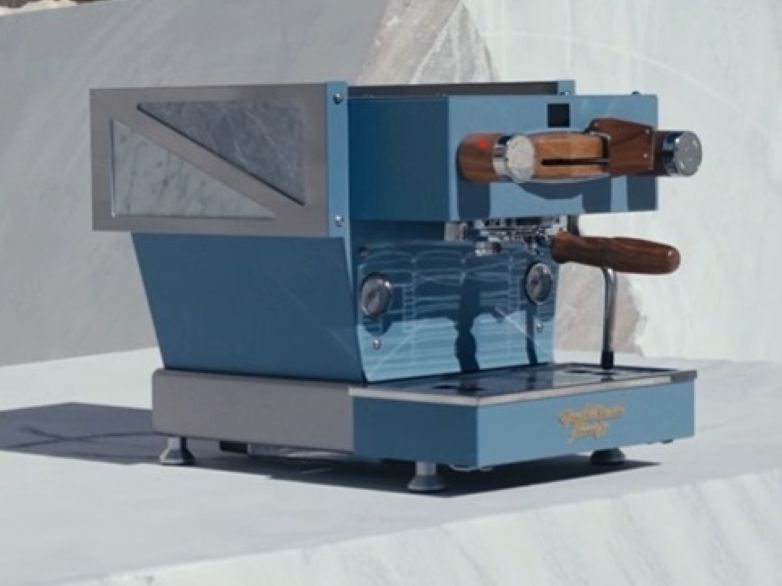
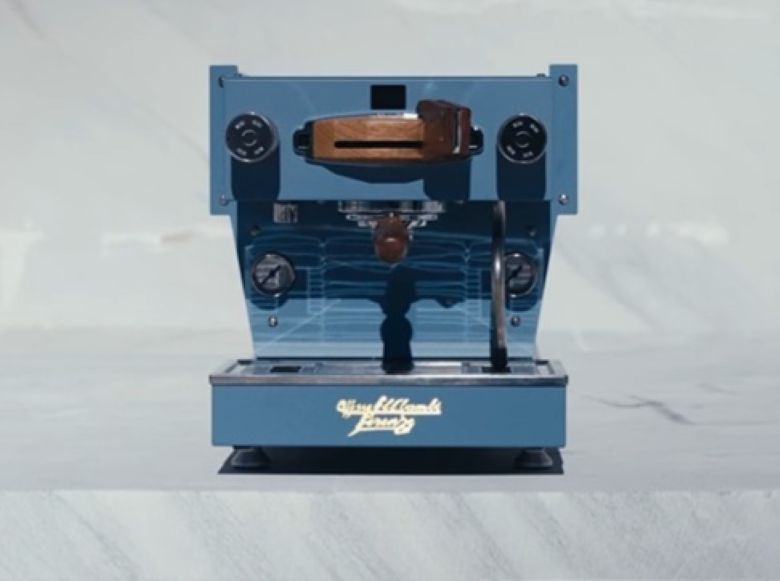
The customised Linea Mini features Bianco HX marble with a Versilys finish, integrated into two panels alongside matte aluminium surfaces. The contrast between the natural veining of the marble and the industrial character of the metal creates a distinctive visual composition, transforming a functional piece of equipment into an object with a strong material identity.
Beyond its aesthetic dimension, the project also highlights the possibilities of adapting natural stone to more specialised manufacturing processes. Elements obtained from standard marble cuts were incorporated into the production, helping to limit material waste.
According to the companies, this is the first time marble has been introduced into the personalisation options of the Officine Fratelli Bambi atelier. The collaboration is also intended to serve as a starting point for further developments, with customers gaining access to selected marbles from Versilia, including Bianco HX and other natural stones, for individually designed machines.
Two Tuscan traditions meet
The collaboration connects two companies whose identities are closely linked to Italian craftsmanship and the knowledge of materials.
La Marzocco was founded in Florence in 1927 by brothers Giuseppe and Bruno Bambi. Over the decades, the company has developed an international presence in the production of espresso machines for both professional coffee businesses and domestic users.
Its Officine Fratelli Bambi atelier, re-established in 2020, focuses on unique and limited-edition machines. Its work combines specialised manufacturing techniques, including traditional manual metal hammering and the use of the English wheel, with contemporary design approaches and collaborations across different creative industries.
The other partner, Luce di Carrara, is the product division of the Henraux Group, a company with a history in marble processing dating back to 1821. Its relationship with the Apuan Alps is particularly significant, with the Monte Altissimo marble deposits forming part of its historical and productive identity.
The mountain also has a notable connection with Renaissance art. In 1517, Michelangelo selected marble blocks from Monte Altissimo for the façade of the Basilica of San Lorenzo in Florence.
Today, through its Living Marble philosophy, Luce di Carrara explores the use of Versilia marbles and other natural stones in contemporary design projects, extending the material’s presence into new creative contexts.
Beyond traditional applications
The Linea Mini project illustrates a broader direction in contemporary product design: the use of natural materials in objects that are not traditionally associated with stone.
Marble’s integration into a coffee machine requires a different approach from its application in architectural surfaces or conventional furniture. Dimensions, weight, fabrication precision and the relationship between stone and other materials all become important elements of the design process.
At the same time, such projects highlight the potential contribution of specialised stone companies to collaborations with manufacturers, designers and brands operating outside the traditional natural stone industry.
For marble producers and processors, these applications represent an opportunity to explore markets where the value of the material is determined not only by its physical characteristics or origin, but also by the design concept, craftsmanship and technical expertise involved in its transformation.
The collaboration between La Marzocco and Luce di Carrara is a relatively specialised example, rather than evidence of a widespread shift in manufacturing. Nevertheless, it demonstrates how natural stone can move into unexpected product categories when traditional material knowledge meets contemporary design requirements.
In this context, marble is not simply a decorative addition to an existing product. It becomes an integral part of its identity, bringing the characteristics of a natural material into direct contact with modern industrial design.