




In a development with broad implications for European trade, the European Union has officially launched arbitration proceedings against Algeria. The move comes in response to a series of strict import and investment restrictions imposed by the North African country, which heavily impact various European productive sectors, with the total ban on marble and ceramic products being one of the most prominent examples.
According to an official statement from the European Commission’s Directorate-General for Trade, the EU requested the establishment of an arbitration panel. This step marks the next institutional phase in the dispute settlement procedure, as bilateral consultations initiated in June 2024 failed to deliver a mutually agreeable solution. The EU contends that Algeria’s generalized measures violate the EU-Algeria Association Agreement, which has been in force since 2005.


The Framework of Restrictions and the Specific Focus on Marble
As clarified by the European Commission, EU economic operators have faced increasing difficulties due to an overarching import substitution policy adopted by Algeria since 2021. This web of restrictive measures includes:
-
An import licensing system that virtually functions as a de facto ban on various products.
-
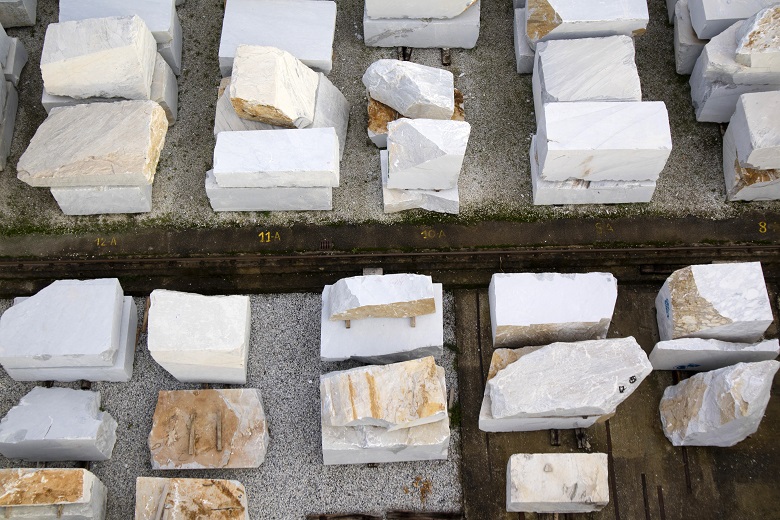
A total ban specifically on the import of marble and ceramic products.
-
Caps on foreign ownership for companies importing goods, alongside onerous re-registration bureaucracy.
Although the EU remains Algeria’s most significant trading partner, these restrictions have led to a steady contraction of European exports to the country, which recorded a 31% drop during the 2014-2024 period.
Next Steps in the Arbitration
By initiating this dispute procedure, the EU aims to restore the rights of European exporters. In this context, the EU has already appointed its arbitrator, while Algeria is required to appoint the second arbitrator within two months. The third arbitrator will be selected by the Association Council, and the ruling issued by this three-member panel will be legally binding for both parties. Meanwhile, Brussels remains open to a negotiated solution at any time.
It is also worth noting that the EU is closely monitoring additional hurdles that have recently been put in place targeting French businesses specifically.
Market Impact
For the marble and construction materials industry, Algeria has traditionally been a considerable market in the Mediterranean basin. The absolute ban on importing these materials has deprived European companies of an important destination.
The EU’s institutional response is not about an isolated sectorial dispute, but an effort to dismantle a broader protectionist policy. If the arbitration rules in favor of Brussels, the lifting of these restrictions is expected to reopen the path for European marble and ceramic products into a market that has remained closed in recent years.