

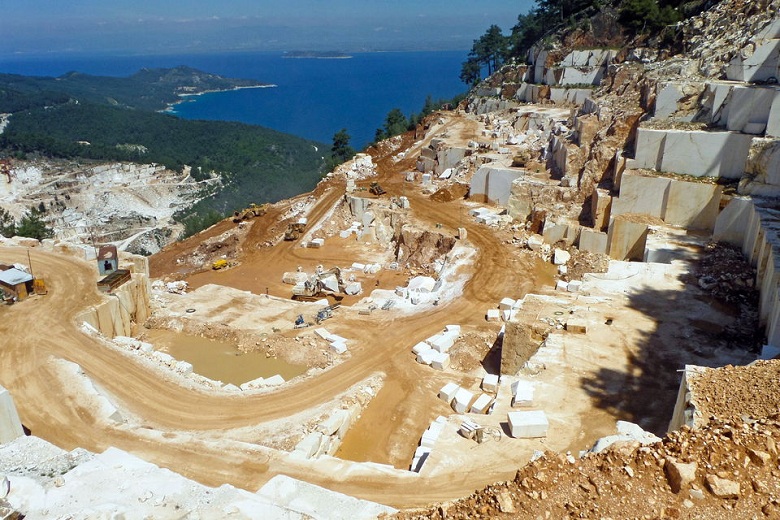



Greek marble exports continue to face challenges, with a clear shift towards finished marble. In the first nine months of 2025, total export value reached €219 million, with a total volume of 549 thousand tons, marking a 6.6% decrease in value and a 10.5% decrease in volume compared to 2024. These figures return the indicators to 2023 levels, reflecting ongoing pressure on international demand.
Marble Blocks and Slabs vs Finished Marble
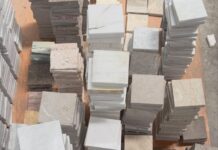
The shift to finished marble is evident. In 2025, finished marble accounted for 60.9% of total export value, with an average price per ton of €928, a record high for the 2015–2025 period. Conversely, marble blocks and slabs decreased in value and price, with an average price of just €211/ton, the lowest level of the last decade. Despite the decline in value, marble blocks and slabs remain dominant in volume, representing 74% of the total.


This trend indicates that the Greek marble industry is gradually moving from volume to value, emphasizing the importance of processing and high value-added products.
Key Markets
China remains the main market for marble blocks and slabs, although demand fell to its lowest level in 11 years, affecting overall performance. Secondary markets such as Italy, Turkey, and India show positive trends but cannot fill the gap left by China.
For finished marble, Saudi Arabia stands out with exports of €29 million and 21 thousand tons, while the UAE and the USA remain stable markets with high average prices per ton. The growth of finished marble demonstrates that the Greek industry can invest in quality and value-added products, despite challenges in overall volume.
Conclusions
The Greek marble industry is at a critical transitional stage. Finished marble boosts export value and quality, while marble blocks and slabs face declining value, price, and volume. China remains decisive for marble blocks and slabs, and secondary markets are insufficient to cover the shortfall.
The shift from volume to value is clear: the Greek marble industry has the opportunity to strengthen its position in the global market as a supplier of high-quality finished marble while leveraging raw deposits for greater value-added production.