


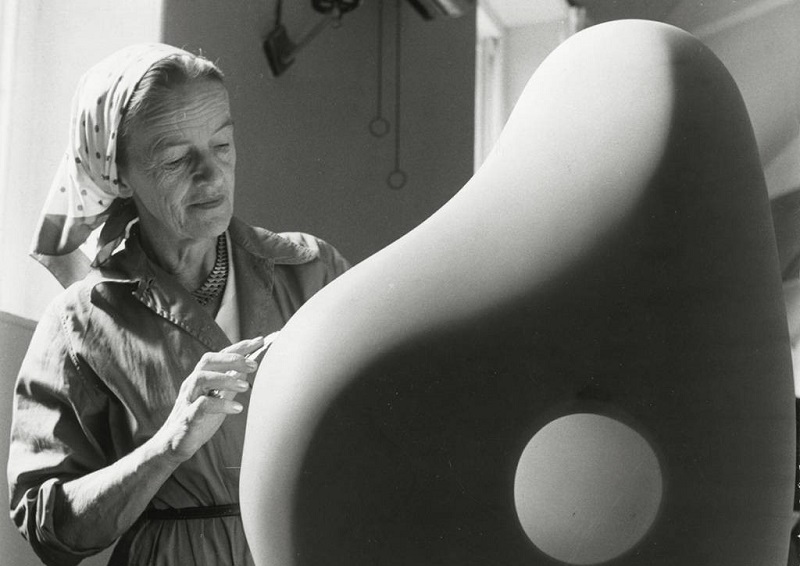



Marble sculpture is one of the most emblematic forms of artistic expression in the history of civilization. From ancient Greek statues to contemporary public sculpture, marble has been a material that captures ideas, memories, and aesthetic sensibilities across different eras. Yet, for many centuries, this art form was considered almost exclusively a male domain. Social norms, limited access to education, and the very nature of the work—which demands physical strength and technical expertise—kept women on the sidelines.
Nevertheless, in different periods of history, women emerged who challenged stereotypes and managed to leave their own mark on the art of sculpture. Through their work, they not only claimed a place in a male-dominated field but also contributed significantly to the evolution of marble sculpture.


Pioneering Women Sculptors Who Left Their Mark
In the 19th century, a time of significant social and artistic transformation, the first women began to establish themselves professionally in sculpture.
One of the most notable figures was the American sculptor Harriet Goodhue Hosmer (1830–1908). She worked primarily in Rome, where a community of artists influenced by Neoclassical ideals had developed. Her work Zenobia in Chains (1859) depicts the queen of Palmyra at a moment of dignified captivity and is considered one of the most important sculptures of the era. Through her subject matter and professional independence, Hosmer became a role model for many women artists.
At the same time, the British sculptor Susan Durant (1827–1873) was active, working in Paris and London creating marble portraits and monumental works. Among her important pieces is a sculpted portrait of King Leopold I of Belgium, as well as a series of works presented in international exhibitions during the 1860s.
By the late 19th century, Ella Rose Curtois (1860–1944) also emerged, regularly exhibiting her works at the Royal Academy in London. Her work The Rescue (1895) highlights her ability to convey intense emotional expression through marble carving.
Another significant figure of the same period was the French sculptor Camille Claudel (1864–1943). A student and collaborator of Auguste Rodin, Claudel created works of great artistic power, such as The Waltz and The Mature Age. Although her work was not limited to marble, her contribution to sculpture was decisive, as she developed a highly expressive and dramatic visual language.
Challenges and Social Barriers
Despite these notable examples, the path for women in marble sculpture was not easy. For a long time, many fine art academies did not allow women to attend sculpture classes or work with nude models, which were a fundamental part of sculptural training.
Moreover, workshops, public commissions, and professional networks were almost exclusively controlled by male artists. As a result, many women produced smaller-scale works or remained relatively unknown, despite the high quality of their work.
The Modern Era and Recognition of Women Sculptors
In the 20th and 21st centuries, the presence of women in sculpture has grown increasingly prominent. Fine art schools opened their doors to female artists, and international exhibitions and public commissions created new opportunities.
One of the most important sculptors of the 20th century was the British artist Barbara Hepworth (1903–1975). Although best known for her abstract works, she worked extensively with stone and marble, creating sculptures such as Single Form and Pelagos. Hepworth is considered a pioneer of modern sculpture, introducing new abstract forms and new approaches to space and volume.
In contemporary European sculpture, the Czech artist Anna Chromý (1937–2021) also stands out. Her work Cloak of Conscience is one of the largest sculptures carved from a single block of Carrara marble. The empty cloak depicted in the sculpture serves as a symbol of conscience and inner reflection.
Another important presence in contemporary marble sculpture is the Swiss artist Sibylle Pasche (b. 1976). With studies at the Academy of Carrara, she creates large-scale marble sculptures that combine geometric forms with organic elements. Her works are presented at international events and in public spaces.
At the same time, many contemporary female artists experiment with the relationship between traditional marble sculpture and new materials or contemporary artistic forms. Marble thus continues to be a living medium of expression, connecting historical tradition with modern artistic creation.
The Importance of Equality in Art
The history of marble sculpture demonstrates that creativity is not limited by gender. The gradual recognition of women sculptors is not only a restoration of historical justice but also an opportunity to enrich artistic heritage with new perspectives and experiences.
Women working in sculpture today continue a path that began centuries ago with a few daring pioneers. Through their work, they demonstrate that marble remains a dynamic and evolving medium, where imagination, technique, and personal expression can coexist without limitations.