


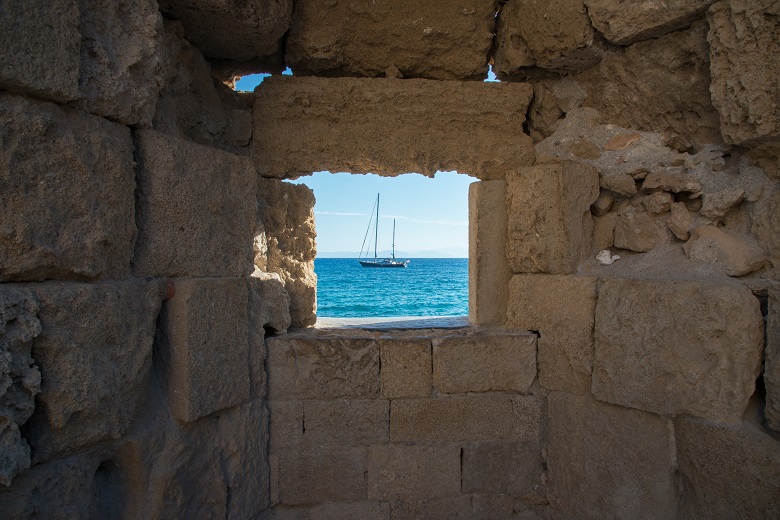



In antiquity, the sea was the great connecting road of the Aegean and the Mediterranean. Marble—heavy and precious—was often transported from island and coastal quarries to distant centers of art and architecture. Long before major land roads existed, maritime routes were the fastest and safest way for this “white gold” to travel.
From quarry to port
The most important extraction sites with direct access to the sea were Paros, Thasos, and Naxos. Here, ancient craftsmen shaped the marble into massive slabs or semi-finished sculptures to remove excess weight. Using ramps and wooden rollers, the stones were moved to the docks, where specially designed cargo ships awaited loading.


Specialized ships and loading techniques
Transporting marble required vessels with sturdy hulls and wide decks. Ancient shipbuilders reinforced the keels with extra beams, while loading was carried out using wooden lifting machines, pulleys, and ropes. The cargo was placed low in the hull to keep the center of gravity stable, even in rough seas.
Maritime trade routes
The main trade routes for marble began in the Aegean islands and extended towards:
-
Athens: Parian and Naxian marble adorned temples and statues on the Acropolis.
-
Asia Minor: Cities such as Ephesus and Pergamon imported marble for both public and private projects.
-
Rome and Italy: Large quantities of marble traveled west, especially during the Roman period, for the construction of temples, theaters, and luxurious villas.
Risks and challenges
Sea voyages were not without danger. Sudden storms, pirates, and naval blockades during wartime threatened both cargo and crew. Experienced captains knew how to use currents and winds to their advantage, and voyages often took place in spring and summer for greater safety.
Marble as a cultural passport
The maritime transport of marble was not only a commercial act, it was also the spread of culture. Marble blocks traveling from Paros or Thasos carried with them the craftsmanship, taste, and aesthetics of Greece to distant lands. In this way, marble became a vehicle for cultural exchange, strengthening the reputation of Greek arts throughout the Mediterranean.