




The California Occupational Safety and Health Standards Board (OSHSB) voted unanimously to launch the process for banning the manufacturing and installation of artificial stone products containing more than 1% crystalline silica. This decision represents a major step in the state’s effort to address the serious health risks faced by workers in the industry.
During its meeting, the Board accepted the relevant petition submitted on behalf of the Western Occupational and Environmental Medicine Association (WOEMA). At the same time, it requested the California Division of Occupational Safety and Health (Cal/OSHA) to immediately draft an emergency finding so that the emergency rulemaking process can be activated.


Setting up scientific committees and risk assessment
In addition to the emergency regulatory measures, OSHSB called on Cal/OSHA to convene advisory committees, including a special scientific committee. Their task will be to assess the feasibility and impacts of the proposed protection measures against silica exposure.
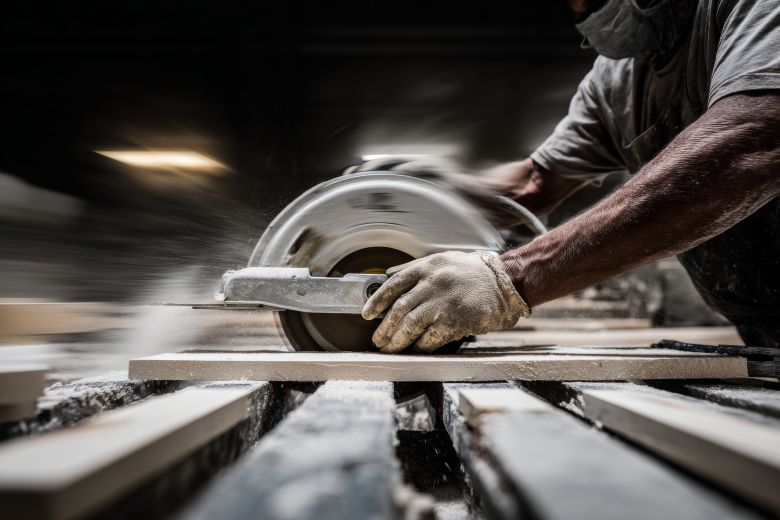
Preliminary assessments conducted by Cal/OSHA and Board staff confirmed that workers involved in cutting, grinding, and installing artificial stone are at high risk due to the inhalation of crystalline silica, while the crisis related to the occurrence of silicosis is worsening. The findings demonstrated that existing protective measures are insufficient to fully cover workers against these specific materials.
Data on silicosis in California
Silicosis is an incurable and progressive lung disease caused by inhaling fine crystalline silica dust.
According to official data from the California Department of Public Health (CDPH):
-
An increasing number of diagnoses has been observed in the state in recent years.
-
The problem disproportionately affects Latino men, who make up approximately 98% of diagnosed workers in this specific sector.
-
The disease shows high mortality at productive ages, as the average age of workers who lost their lives to silicosis was under 50 years old.
History of state interventions
The recent OSHSB decision follows a series of measures taken by California to limit exposure to crystalline silica:
-
December 2023: The Board approved an Emergency Temporary Standard (ETS) to enhance protection in high-exposure operations (cutting, grinding, cleaning) of artificial and natural stone with a silica content over 10%.
-
February 2025: A permanent safety standard was adopted, making stricter specifications legally binding for employers in the industry.
-
October 2025: “Senate Bill 20” was passed by Governor Gavin Newsom, officially characterizing silicosis as a serious illness and mandating coordinated data sharing between Cal/OSHA and the Department of Health.
So far, through the Silica Special Emphasis Program, Cal/OSHA has issued more than 900 citations, with proposed fines reaching $1.9 million, while 465 on-site advisory visits to businesses have been carried out, informing more than 27,000 workers.