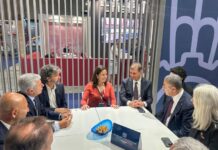


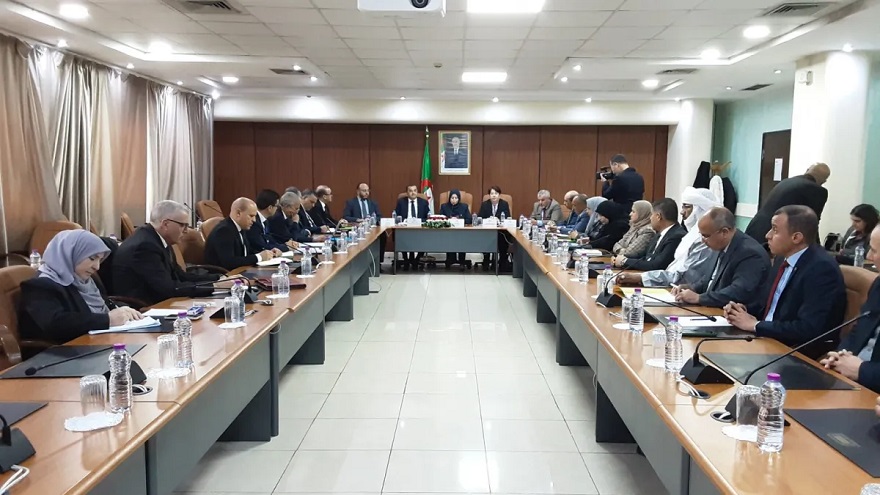



In a detailed and candid address before the National Assembly’s Commission for Economic Affairs, Development, Industry, Trade and Planning, Minister of State Mohamed Arkab delivered a comprehensive assessment of Algeria’s mining sector — highlighting its vast yet underexploited potential, longstanding bottlenecks and the reform roadmap aimed at turning natural resources into genuine national value.
The session, attended by Secretary of State for Mines Karima Bekir Tafer, the Director-General of the National Agency for Mining Activities Mourad Hanifi and senior ministry officials, reaffirmed mining as a central pillar for economic diversification beyond hydrocarbons and as a core component of the State’s long-term development agenda.


A Clear Political Mandate for Transformation
Arkab underlined that this strategic shift stems directly from the mandate of President Abdelmadjid Tebboune, who has placed the transformation of the mining sector at the forefront of efforts to strengthen Algeria’s economic independence. The mobilisation of the country’s rich mineral resources — including non-ferrous and industrial minerals such as marble and granite — is essential to reduce reliance on hydrocarbon revenues and to generate domestic value-added production.
Diagnosis: Underperformance Despite Abundant Resources
The minister outlined a sector characterised by high geological potential but persistently low contributions to GDP. He attributed this underperformance to systemic shortcomings:
-
chronic underinvestment in exploration and geological research,
-
a lack of modern and reliable geological data,
-
continued imports of materials abundantly available domestically — from concentrated iron ore to barite, bentonite, calcium carbonate, marble and granite,
-
significant losses of foreign currency due to this dependency on imports.
The case of natural stone, particularly marble and granite, was presented as a clear example of the gap between Algeria’s mineral wealth and its limited industrial exploitation.
Regulatory and Infrastructural Obstacles
Arkab pointed to the outdated legal framework (Law 14-05), slow and complex permit procedures, insufficient rail and port capacity, financing challenges and limited technology transfer. These issues have constrained industrial activity, job creation and the sector’s overall contribution to the national economy. The constraints apply equally to industrial minerals and to natural stone extraction and processing.
A Turning Point: The New Mining Code
The minister emphasised that the adoption of the new mining code in August constitutes a major structural shift. The reforms:
-
simplify procedures and shorten licensing timelines,
-
establish a single-window mechanism for investors,
-
allow exploration investment without the immediate creation of a corporate entity,
-
introduce, for the first time, the possibility of transferring, leasing or mortgaging mining titles — facilitating access to bank financing,
-
strengthen institutions such as the National Agency for Mining Activities and the Geological Service of Algeria.
These measures are expected to support investment not only in major mining projects but also in quarrying and value-added processing of marble and granite.
Moving Toward an Integrated Mining Industry
Arkab detailed emblematic projects that reflect this strategic shift, including Gara Djebilet (iron ore), the integrated phosphate project in the east, and the zinc-lead project at Oued Amizour – Tala Hamza.
At the same time, he stressed the need to reinforce value chains for non-ferrous and industrial minerals — including natural stone — and to fully substitute imports. This, he said, is a sovereign imperative aimed at preserving national wealth and preventing the export of unprocessed raw materials.
Infrastructure Upgrades to Remove Long-Standing Bottlenecks
The minister highlighted progress on essential logistics infrastructure:
-
the Gara Djebilet–Béchar railway line, scheduled to enter service in January 2026,
-
the modernisation of the Tébessa – Souk Ahras – Annaba corridor,
-
the extension of the mineral port of Annaba.
These developments, while supporting large-scale mining projects, will also strengthen the competitiveness of sectors such as marble and granite that depend on efficient transport of heavy materials.
International Partnerships and Technological Upgrading
Arkab concluded by stressing the role of international partnerships in mobilising foreign capital, importing advanced technologies and upgrading national skills — a strategy designed to benefit all segments of the mining industry, including the natural stone sector.
Conclusion
Algeria stands at a pivotal moment. With a new legal framework, improved infrastructure and a strong political commitment to reducing imports and enhancing domestic production, the country aims to reshape its mining sector — not only in metals and phosphates but also in industrial minerals such as marble and granite. If fully implemented, these reforms could transform the sector into a durable engine of long-term national value.