




On March 24, 2026, the European Union and Australia announced the historic conclusion of negotiations for a Free Trade Agreement (FTA), following eight years of intensive talks. This agreement is considered a milestone for strengthening economic ties and strategic cooperation in the Indo-Pacific region, aiming to eliminate tariffs on more than 99% of EU exports.
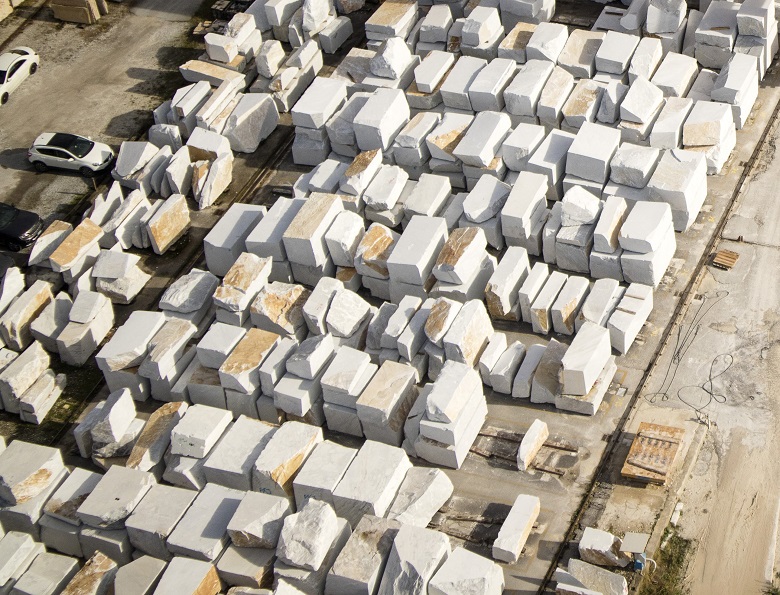
Beyond industrial products, the agreement includes critical provisions for access to raw materials and the protection of Geographical Indications. For the natural stone sector, the FTA is set to completely transform the landscape of exports to Australia.


Tariff Elimination: Immediate Relief for Processed Stone (Chapter 68)
The most fundamental change brought by the FTA is the total elimination of the 5% import tariff that previously applied to processed marble, granite, and slate (Chapter 68). Raw stones (Chapter 25) will now enter with 0% duty from the first day the agreement enters into force.
Export X-Ray: The Dominance of Processed Products (2025 Data)
The significance of removing tariffs in Chapter 68 is evident from the snapshot of European exports to Australia in 2025:
-
Total Figures: EU-27 marble exports reached a value of €38,186,780 and a quantity of 14,498 tons.
-
Preference for Processed Stone: 96.36% of the value and 90.48% of the quantity correspond to processed marble (polished slabs and tiles), proving that Australia is a market seeking high-quality, ready-to-use products.
-
Market Shares & Pricing:
-
Italy dominates with an 89.79% value share, with an average price of €3,186/ton.
-
Greece follows steadily in second place, with 6.27% of the value and an impressive 13.77% of the quantity.
-
Spain holds 3.10% of the value.
-
-
Average Price: The overall average price per ton for processed marble stood at €2,805.
Eliminating the 5% tariff at these price levels makes European marble immediately more competitive, reducing the final cost for the Australian importer without affecting the exporter’s profitability.
Natural Stone: The Answer to the Australian Market Gap
A crucial coincidence favoring the sector is the total ban on engineered stone in Australia, which came into full effect on January 1, 2025, for public health reasons (silicosis).
This development has overturned the status quo in the construction and interior design sectors. Natural marble and granite, as materials of superior aesthetics and ecological profile, are now emerging as the primary replacement options to meet the demand for countertops and structural surfaces. The new FTA acts as a “catalyst,” facilitating the flow of European natural materials to fill the significant void left by the withdrawal of artificial products.
Facilitating Investment and Standards
The agreement includes provisions to reduce technical barriers, making it easier to recognize European quality and sustainability standards (e.g., LEED/BREEAM). This means simpler penetration into large-scale construction projects where specifications are strict, and improved customs procedures through digitalization.
Summary of Benefits for the Sector
| Area | Benefit from the Agreement |
| Tariffs | Immediate elimination of the 5% duty for processed marble. |
| Market | Strategic advantage due to the ban on engineered stone in Australia. |
| Certification | Easier recognition of European standards (LEED/BREEAM) in major projects. |
| Procedures | Reduced bureaucracy and digitalization of customs documents. |
Next Steps
The agreement is not yet in immediate effect. It will now undergo legal scrubbing and translation, followed by official ratification by the European Parliament and the Parliament of Australia. While this process may take some time, the political and economic signal is clear: Australia is now an open and preferential market for European natural stone.