




One of Southeast Asia’s most iconic geological complexes, Ngu Hanh Son, merges rare marble landscapes with centuries of quarrying and stone-carving heritage.
The city of Da Nang in central Vietnam is preparing an official nomination dossier seeking UNESCO World Heritage status (Mixed Cultural and Natural Heritage) for the Marble Mountains (Ngu Hanh Son) complex.


The initiative aims to highlight the site’s dual significance: its exceptional karst formations of limestone and marble, as well as the rich historical, spiritual, and stone-carving legacy of the region.
Geology and the Five Elements
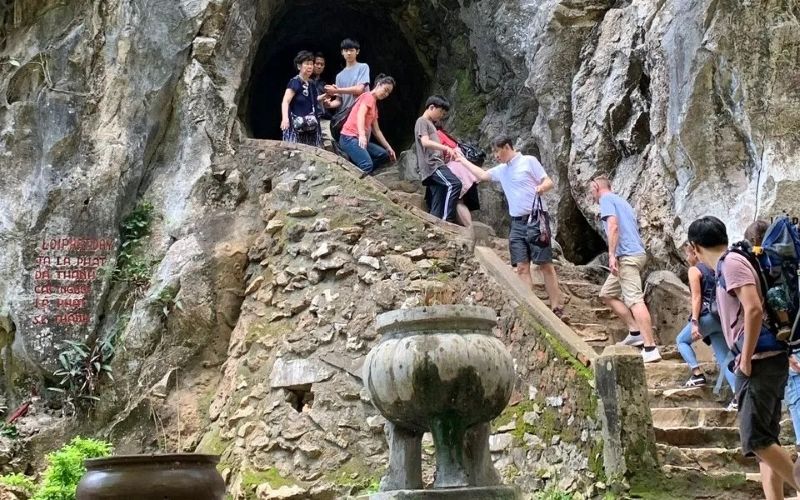
The Marble Mountains consist of a cluster of five marble and limestone hills rising dramatically from the coastal plain of Da Nang. Their Vietnamese name, Ngũ Hành Sơn, translates to “Mountains of the Five Elements”, with each peak named after a element of Eastern philosophy: Water (Thuy Son), Wood (Moc Son), Fire (Hoa Son), Metal (Kim Son), and Earth (Tho Son).
The geological composition features high-quality marble strata in various shades—ranging from white and grey to pink and reddish tones—formed over millions of years of karstic activity, which also created impressive caves and natural caverns.
| Feature | Description |
| Location | Ngu Hanh Son District, Da Nang, Vietnam |
| Rock Types | Multi-colored Marble & Karst Limestone |
| Protection Status | Special National Monument (2018) / UNESCO Nomination |
| Cultural Heritage | Ancient stone inscriptions (Ma Nhai), Buddhist & Hindu sanctuaries |
From Quarrying to Heritage Protection: Non Nuoc Stone Carving Village
The history of the Marble Mountains is deeply intertwined with the stone industry. Dating back to the 17th century, the famous Non Nuoc Stone Carving Village developed at the foot of the hills.
For centuries, local artisans extracted marble directly from the mountains to craft architectural elements, religious statues, and decorative artwork—many of which adorned the royal palaces of the Nguyen Dynasty in the imperial city of Hue.
To prevent environmental degradation and preserve the structural integrity of the landscape, the Vietnamese government strictly banned all direct quarrying from the Marble Mountains. Today:
-
Non Nuoc remains one of the premier stone-carving centers in Southeast Asia.
-
Local processing workshops now import raw marble and natural stone blocks from other Vietnamese provinces (such as Nghe An and Quang Nam) as well as international sources.
-
In 2022, the 78 ancient stone inscriptions (Ma Nhai) engraved on the cave walls were inscribed into the UNESCO Memory of the World Register for Asia-Pacific.
Nomination Timeline
The nomination process is currently in its preparation phase following formal meetings between Da Nang authorities and the UNESCO World Heritage Centre.
-
Dossier Preparation: Finalizing technical and scientific studies for inclusion in Vietnam’s Tentative List.
-
Official Submission: According to UNESCO guidelines, official nomination dossiers must be submitted by February 1st of any given year.
-
Evaluation Phase: A 14-month evaluation period follows submission, involving on-site inspections by advisory bodies such as ICOMOS (for cultural heritage) and IUCN (for natural and geological features).
The final decision by the World Heritage Committee is expected at its annual session following the completion of the evaluation cycle.