

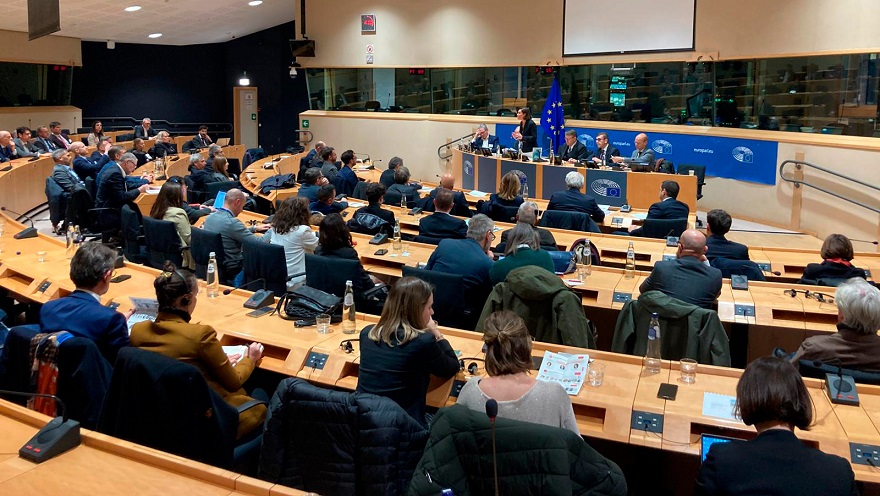



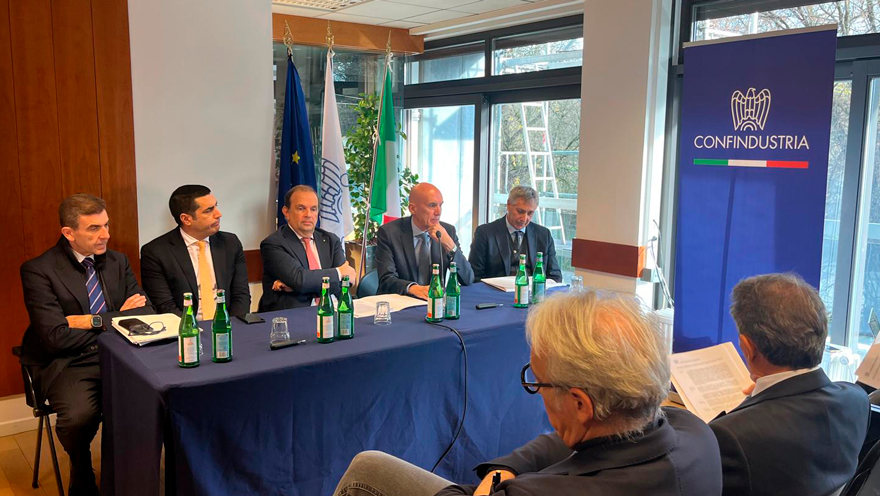
On 2 and 3 December, the leadership of Confindustria Ceramica and representatives of leading Italian ceramic companies visited Brussels for a series of meetings with European officials. Their aim was to present the growing concerns of a highly energy-intensive and export-oriented sector, which considers the current European climate policy framework —particularly the Emissions Trading System (ETS)— as a pressure that could significantly affect its sustainability and competitiveness.
The sector comprises 248 companies, supports 26,000 direct jobs (approximately 40,000 including the supply chain), and exports products worth over €6.3 billion annually. Industry representatives argue that rising energy costs and CO₂ allowance burdens reduce investment capacity, noting that investments fell by 20% in just one year — a trend directly linked to compliance costs.


During meetings with European officials and the annual plenary session of the European Policy Ceramics Forum, the impact of the ETS, compensation mechanisms, and unfair competition from third countries were discussed. The industry warns of the risk of relocating production outside the EU to regions with lower environmental and social standards, which could affect both European economies and global emissions.
Regional authorities in Emilia-Romagna highlighted that many companies have already invested in technological upgrades, emission reduction, and digital transformation. However, they expressed concern that overly strict or asymmetric regulations could impact even the most innovative companies, giving an advantage to producers outside the EU.
MEPs and representatives of EU institutions recognize the difficulties faced by the Italian ceramic sector but emphasize that the path toward climate neutrality remains a priority for the EU. Discussions highlighted different approaches: some advocate immediate suspension or substantial revision of the ETS to alleviate the short-term financial burden on energy-intensive industries, while others propose targeted adjustments to mitigate impacts without disrupting the EU’s overall climate strategy.
At the same time, EU institutions stress the need to maintain a strong industrial base in Europe, so that the green transition does not reduce competitiveness or shift production to countries with lower environmental standards. Discussions showed that the challenge is twofold: reducing emissions without undermining the viability of companies, and safeguarding jobs in high-skilled sectors.
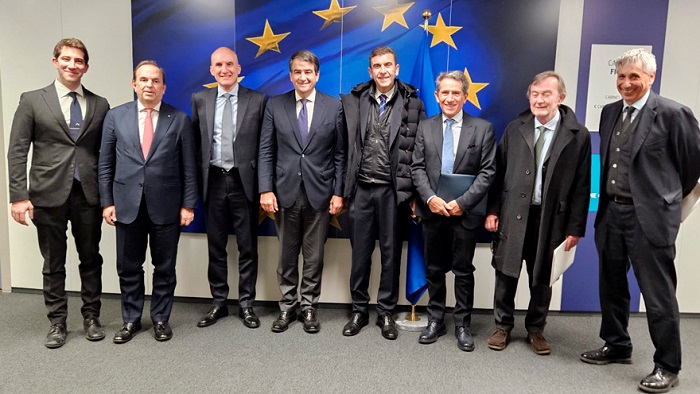
Overall, the meetings in Brussels highlighted the pressures facing the Italian ceramic sector and the critical crossroads it is at, while also showing the EU’s ongoing efforts to combine the green transition with the maintenance of a strong industrial base, indicating that any changes to the ETS or climate policies have significant economic and industrial consequences.